
Stability Over Speed in the Wi-Fi 8 World
One of the most notable changes in the proposed Wi-Fi 8 standard (IEEE 802.11bn) can be seen in the name they chose for it: Ultra High Reliability (UHR).
No longer is the push for more throughput speed at the forefront of the next release, but some long overdue stabilization for client connectivity. As the wireless environment has evolved from a nice-to-have superfluous feature to becoming a mission critical element of the network, unstable connections are no longer an acceptable occurrence. As applications and clients evolve, especially with new AI initiatives, the penalty for unreliable network connections can possibly collapse a business’s productivity.
Not being able to pull up an email in a conference room is an annoyance, however, having a fleet of autonomous vehicles frozen in the middle of your factory is a crisis.
Wi-Fi 8 promises Multi-AP Coordination, Distributed Resource Units, Dynamic Bandwidth Expansion, and Enhanced Long Range to name a few, but will it be enough for mission critical infrastructure?
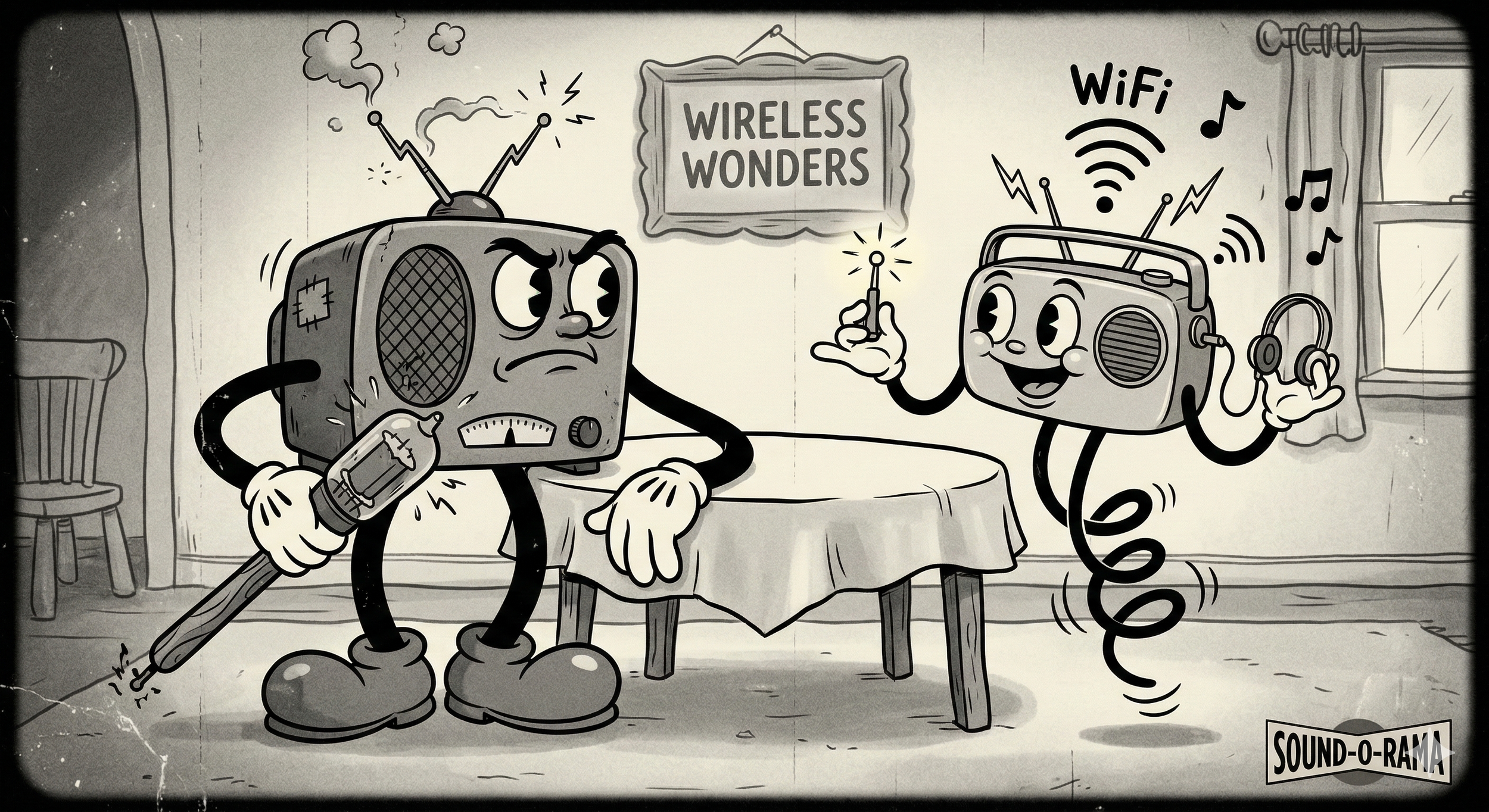
Old Clients will not support New Protocols
Backwards compatibility in the Wi-Fi spectrum, when forced to support older clients, is still a factor that can hobble the best wireless network. As a collision avoidance technology. Older clients that have lower connection speeds can bog down the overall throughput on any channel they join, but they can also prevent turning on those newer features that enable reliability in connections and roaming.
It is almost like having to share a single lane highway with a horse and buggy…
What are those Old Devices doing to my Security?
The infrastrucutre support for older clients will also compromise security. The network is only as secure as the weakest link. If a pre-shared key is required for an old client to authenticate, then the wireless network is only as secure as that password and the sticky note that we all know it was written upon.
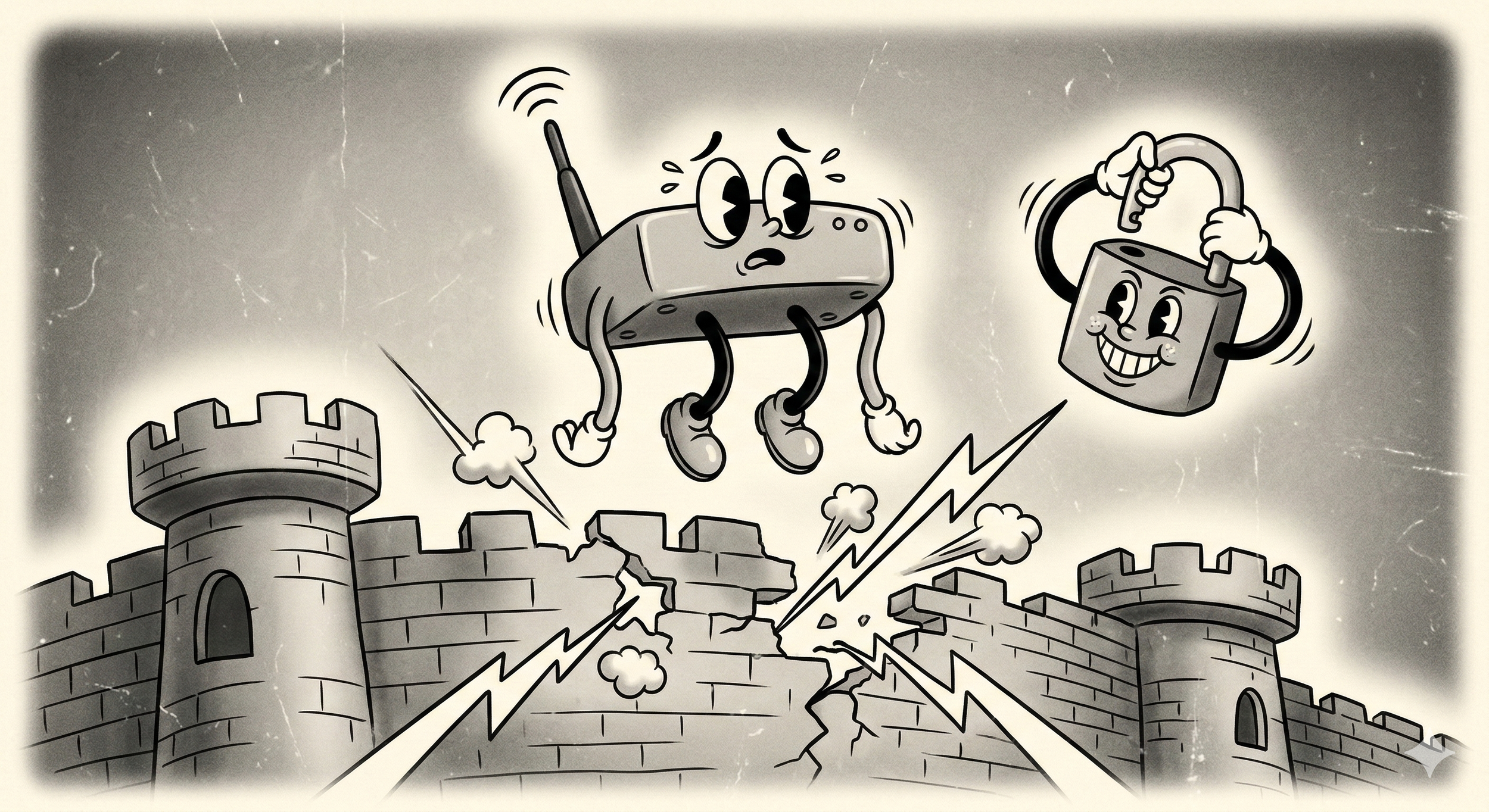
The new AirSnitch attack can even use your guest WLANs, or poorly secured WLANs mentioned above, to bypass the encryption on other more secure WLANs and run man-in-the-middle attacks. Do you know who is talking to those critical infrastructure clients out on the factory floor? The more autonomous the clients, the more dangerous the vulnerability becomes.
Updating needs to be Accompanied by Design and Surveys
The introduction of the 6.0GHz band with Wi-Fi 6E can give a sanctuary for high performance devices through its exclusivity. A client radio that can support the new spectrum and updated security requirements like WPA3 provides a minimum bar for entry and should be capable of utilizing the new features without worrying about having to remove any protocols advances for any lingering archaic devices.
Simply moving to newer 6.0GHz equipped wireless access points is not enough without proper design considerations. The higher spectrum frequency will require denser wireless access point deployments as they suffer from more attenuation as they pass through obstacles.
Every spectrum has its own nuances, and skipping over a wireless survey is not a strategy that will lead to acceptable results. A designed deployment geared to optimize for 2.4GHz or 5.0GHz coverage is going to fail to deliver in 6.0GHz.

Most industries already have a Wi-Fi network deployed. However, the business case for that wireless infrastructure, and how it was designed, can easily be lost over the years as a business evolves and grows. New clients are added to existing Wi-Fi networks because it is convenient and cheap as pre-existing infrastructure.
This is done without considering the ultimate impact on existing or future client performance and reliability.
This brings up the ultimate question you should be asking: “which of my wireless clients should be on the Wi-Fi spectrum?”
To answer this question, the nature of the client and the data/application they are supporting should be taken into account.

A sensor or tag giving out small periodic data is more suited to a LoRaWAN deployment where hundreds to thousands of clients can sustain themselves on batteries and a single or pair of radios can cover entire factories. Trying to force this solution on Wi-Fi, however, would be a nightmare suffered for no good reason.
Private 5G Solutions
When you start introducing clients that are intolerant to disconnections and have specific latency requirements, especially in challenging environments, placing those clients on a Wi-Fi network can be a poor endeavor. But there is a solution for that scenario as well.
Deploying a private LTE/5G network (RAN, core, transport) to your facility to handle a highly mobile mission-critical devices that demand reliability standards should always be a top consideration. A private 5G network does not replace a Wi-Fi Network, but works alongside it, both hosting clients most adept to their advantages.
A 5G solution does not require the in-depth wireless site surveys that a Wi-Fi network would require, the spectrum is tolerant to the more challenging environments, and therefore a dense high proximity Wireless Access Points is not a requirement. A 5G solution can also use a licensed spectrum that allows specific control over what and who is transmitting in that frequency.
If you have a client whose connection to the network is mission-critical, being able to prevent other devices from broadcasting in that spectrum becomes paramount. If an outside entity is causing you interference in a nonlicensed spectrum there is little to no recourse.
With greater control over what clients are connecting to the 5G network, that network can be specifically tailored to support those clients.
Security on a 5G network comes down to a physical SIM or ESIM, no passwords to leak or spoof, no weak security to exploit.

Gone are the days where any wireless capable clients should be simply dumped on the Wi-Fi network.
Every spectrum and protocol have a way of handling data that optimizes their solutions. It is the job of the Network Architects to find and utilize the one that best accomplishes the business goals.
Wi-Fi 8 standards are coming soon to help with stabilization, but it will still need design considerations and dealing with legacy devices. Also, an unlicensed spectrum will always be vulnerable to interference.
Private 5G is looking like the best solution for securing highly mobile wireless clients to meet the growing need of products that always need to be connected.
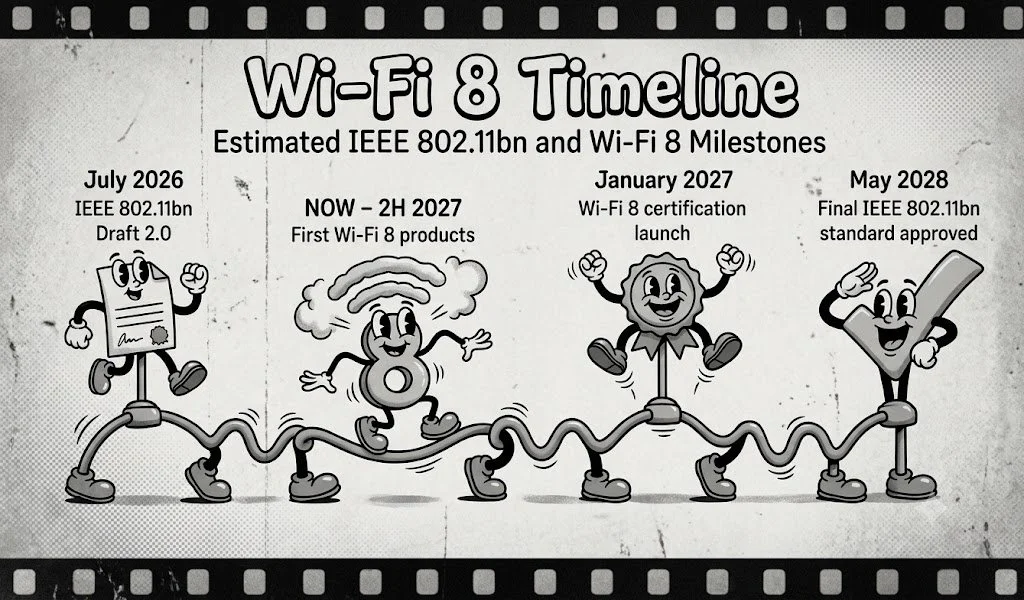
Estimated Timetable for Wi-Fi 8
Above is the estimated timeline to when we can expect to start seeing Wi-Fi 8 infrastructure and clients in the wild.
Early adoption, before standard approval, always carries a risk of missing or incompatible features.
Contact Us
Organizations interested in discussing how current and future Wi-Fi standards could apply to their environment, can contact the EIA team to continue the conversation: